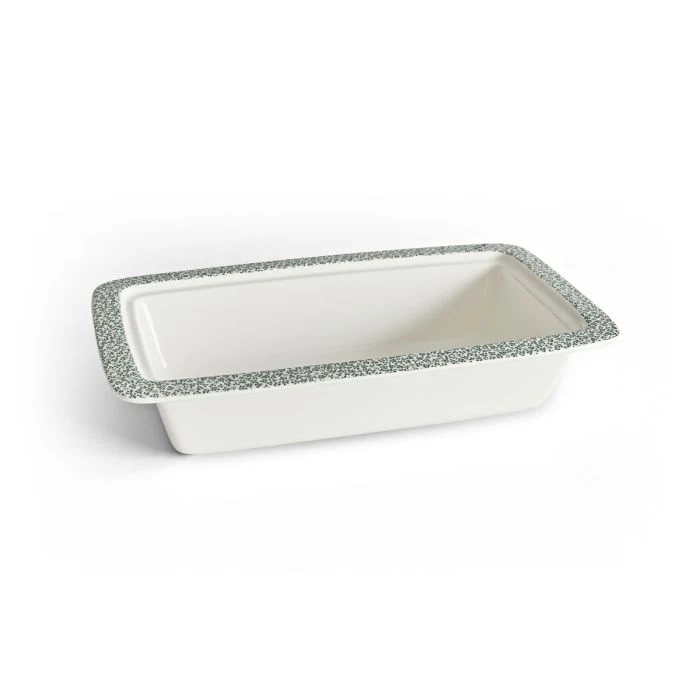
Ruskin for Spode AGA Pie Dish
Founded in 1770, Spode is renowned for its timeless style and is an icon of British craftsmanship.
With a focus on design and being true to the legacy of Spode, the Ruskin House pattern, which adorns Spode X AGA cookware, celebrates the best of British heritage with its intricate Thyme pattern. A nod to the Arts & Crafts Movement, a movement inspired by John Ruskin and William Morris, Ruskin House balances a timeless archive design with a modern feel.
The oven-to-table ware goes through three firings, the first is a biscuit firing at 1200°C, the second is the glaze firing at 1140°C and finally the lithography takes place to add the decoration before its final firing at 1100°C.
Founded in 1770, Spode is renowned for its timeless style and is an icon of British craftsmanship.
With a focus on design and being true to the legacy of Spode, the Ruskin House pattern, which adorns Spode X AGA cookware, celebrates the best of British heritage with its intricate Thyme pattern. A nod to the Arts & Crafts Movement, a movement inspired by John Ruskin and William Morris, Ruskin House balances a timeless archive design with a modern feel.
The oven-to-table ware goes through three firings, the first is a biscuit firing at 1200°C, the second is the glaze firing at 1140°C and finally the lithography takes place to add the decoration before its final firing at 1100°C.
Original: $49.21
-65%$49.21
$17.22Description
Founded in 1770, Spode is renowned for its timeless style and is an icon of British craftsmanship.
With a focus on design and being true to the legacy of Spode, the Ruskin House pattern, which adorns Spode X AGA cookware, celebrates the best of British heritage with its intricate Thyme pattern. A nod to the Arts & Crafts Movement, a movement inspired by John Ruskin and William Morris, Ruskin House balances a timeless archive design with a modern feel.
The oven-to-table ware goes through three firings, the first is a biscuit firing at 1200°C, the second is the glaze firing at 1140°C and finally the lithography takes place to add the decoration before its final firing at 1100°C.